
The Short Answer: It Depends on the Source
Homeowners insurance typically covers water damage that is sudden and accidental, a pipe that bursts overnight, a washing machine supply line that lets go, or a dishwasher that overflows while you’re loading the car. What it almost never covers is water damage that built up slowly over time: a pinhole leak behind the wall that dripped for months, a roof that’s been soft for years, or a crawl space that’s been damp since the last El Niño. The single most important question your adjuster will ask is how long has this been going on?, and the answer will shape nearly everything that follows.
What Standard HO-3 Policies Usually Cover
Most California homeowners carry an HO-3 policy, which covers the structure of your home against a named list of perils. For water damage, the covered causes typically include:
- Burst or frozen pipes, including supply lines to appliances
- Accidental overflow from a plumbing fixture, appliance, or HVAC condensate line
- Sudden discharge from a water heater that fails
- Roof damage from a storm, if wind or hail creates an opening and rain enters through it
- Firefighting water, the water used to suppress a fire in your home is generally covered under the fire peril
The key word threading through all of these is sudden. Insurance is designed to cover the unpredictable, not the inevitable. A pipe that freezes during an unusual cold snap in Ventura qualifies. A slow drip under the kitchen sink that finally warped the cabinet floor does not.
Personal property coverage (Coverage C on your policy) follows similar logic, your furniture, electronics, and clothing damaged by a covered water event are generally reimbursable up to your policy limits, minus your deductible.
What Policies Almost Never Cover
Understanding the exclusions is just as important as knowing the coverage, because these are the situations where homeowners get surprised.
Gradual or long-term leaks. If a claims adjuster or the restoration contractor’s moisture readings suggest the damage has been accumulating for weeks or months, the carrier will typically deny the claim on the grounds of neglect or lack of maintenance. Staining patterns, mold colonization (which can begin within 24–72 hours of a moisture event and spread from there), and deteriorated building materials all tell a timeline story.
Flooding from outside the home. This is one of the most misunderstood gaps in standard homeowners coverage. If a storm surge, rising creek, or overland sheet flow pushes water into your house, that is a flood, and flood damage requires a separate policy, typically through the National Flood Insurance Program (NFIP) or a private flood carrier. Ventura County’s proximity to the Ventura River, low-lying coastal areas, and the drainage patterns that come with the region’s periodic heavy rain events make this worth knowing before you need it.
Sewer or drain backup. Water that comes up through a floor drain or toilet due to a sewer backup is excluded from most base policies. Many carriers offer a sewer backup endorsement as an add-on, it’s usually inexpensive and worth asking about.
Earth movement. If soil shifting or a mudslide (not uncommon in parts of Ventura County after a fire season strips hillside vegetation) causes a foundation crack that lets water in, that’s typically an earth movement exclusion, not a water damage claim.
How to Document a Claim Before the Adjuster Arrives
If you’ve had a sudden water event, how you document it in the first hours matters as much as the damage itself. Here’s a practical sequence:
- Stop the source first. Turn off the supply valve under the fixture or, if you can’t isolate it, shut off the main water supply to the house.
- Photograph everything before moving it. Take wide shots of each affected room, then close-ups of the water source, the staining, and any damaged materials. Timestamp is automatic on a phone camera.
- Note the date and time you discovered the damage, write it down somewhere you won’t lose it. This becomes part of the claim record.
- Save damaged materials. Don’t throw out soaked carpet, warped flooring, or a failed supply line before the adjuster sees it. If you must remove something for safety, set it aside and photograph it in place first.
- Call your carrier to open the claim. Most carriers have 24-hour claim lines. Opening the claim does not obligate you to accept their first offer, it starts the clock on their response obligations.
- Mitigate further damage. Your policy requires you to take reasonable steps to prevent additional loss. Extracting standing water, placing towels, or calling a water damage restoration company to begin drying are all appropriate mitigation steps, and the cost is typically reimbursable under your claim.
The Restoration Process and How It Connects to Your Claim
Once a claim is open, most carriers expect you to hire a licensed restoration contractor to assess and dry the structure, not just mop up and repaint. Here’s why that matters:
Water moves into materials faster than it evaporates out of them. Drywall, insulation, and wood framing can read dry at the surface while staying saturated inside, which is exactly the condition that leads to mold growth. Professional restoration involves moisture mapping with thermal imaging and pin-type meters, followed by industrial drying equipment, air movers and dehumidifiers, positioned and monitored over several days until the readings return to pre-loss baselines.
That documentation, the moisture logs, the equipment placement records, the daily readings, becomes part of your claim file. It’s what separates a defensible, fully-paid claim from one that gets disputed months later when mold shows up and the carrier questions whether proper drying ever happened.
If your home was built before the 1980s (and a significant portion of Ventura’s older neighborhoods were), the restoration scope may also include testing for lead paint or asbestos in materials that need to be removed, which adds a layer of regulatory compliance to the project.
Closing: When to Make the Call
If you’re reading this after a water event, even a small one, the honest answer is that the damage is probably larger than what’s visible. Water finds the path of least resistance through wall cavities, under flooring, and into subfloor materials that won’t show a stain until they’re already compromised.
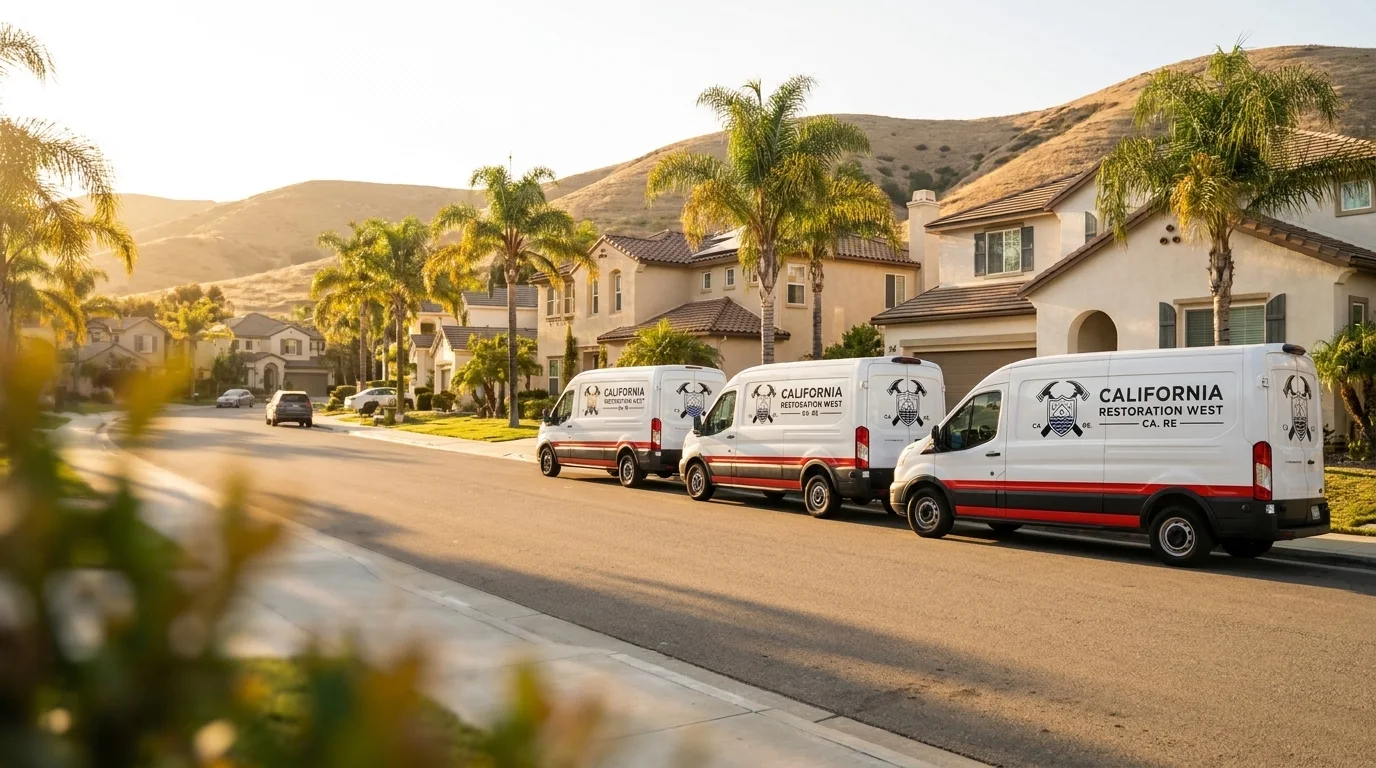
California Restoration West serves Ventura and the surrounding area and can help you assess what you’re actually dealing with, document it properly for your carrier, and walk you through the restoration process. You can reach the team at (805) 290-7292. Even if you’re not sure whether the situation warrants a call, it’s better to know early than to find out three weeks later that the wall cavity never dried.